Founding Engineer, Outpaint (YC W21)
September 2024 — Present
New York, NY
Outpaint (formerly True3D) is a research lab building immersive media: capture, compression and playback of 3D scenes that you can move around inside. I was the first engineer hire and own the rendering and media processing end to end: the codecs that get 3D data onto the GPU, the renderers that draw them, and the training code that produces them in the first place. Everything has to run in a browser tab on a laptop, so I was deep in both CPU and GPU optimization.
Highlights
- Built a voxel-video decoder in WebGPU that is ~3× faster than the WebAssembly decoder it replaced. Implented a block-parallel entropy decoder and a work-efficient prefix sum, hitting 10B voxels/s in-browser on consumer laptops.
- Shipped two WebGPU voxel renderers: raycasting for opaque scenes, splatting for transparent ones. They render up to 1B voxels at 60fps (1080p, M4 MacBook). These powered the interactive investor demos for our seed raise.
- Wrote a CUDA differentiable renderer for training 4D Gaussian splats with custom attributes (polynomial motion, time-constraint), producing models 5× smaller than per-frame 3DGS.
- Developed a novel UX paradigm for viewing 3D media on a flat screen using iris tracking via MediaPipe. Open-sourced the implementation for 350 GitHub stars.
- Designed a spatial-photo format that re-represents splat output as mesh + atlas geometry: >99% smaller, natively rasterizable, no per-frame splat sorting.
- Built a WebGL depth-video renderer and WebXR viewer, using WebCodecs for frame-accurate depth/color sync.
Projects here
-
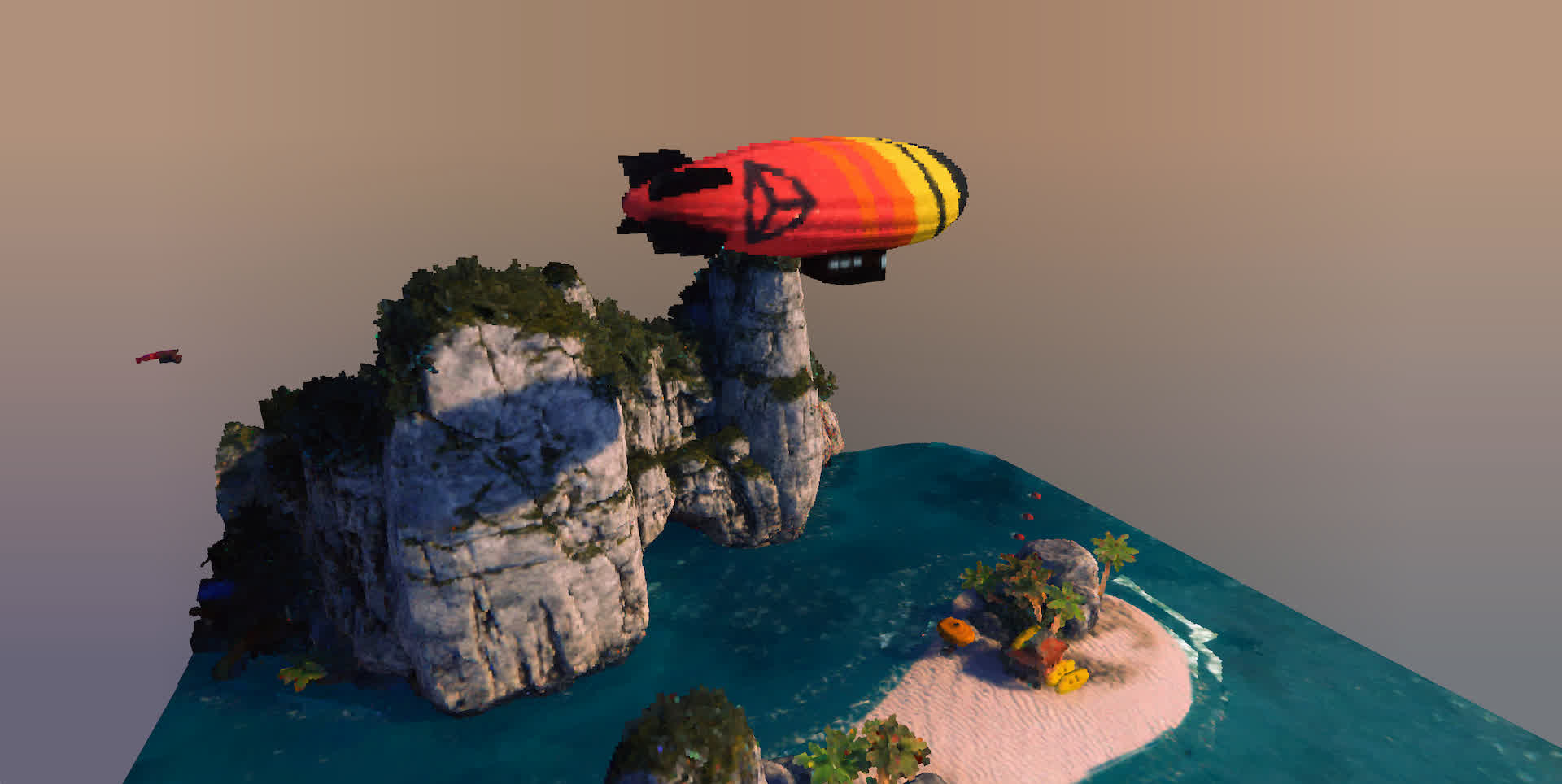
A first-of-its-kind 3D video codec based on voxels. Both WASM and WebGPU-accelerated decoders on the web.
-
4D Gaussian Splats
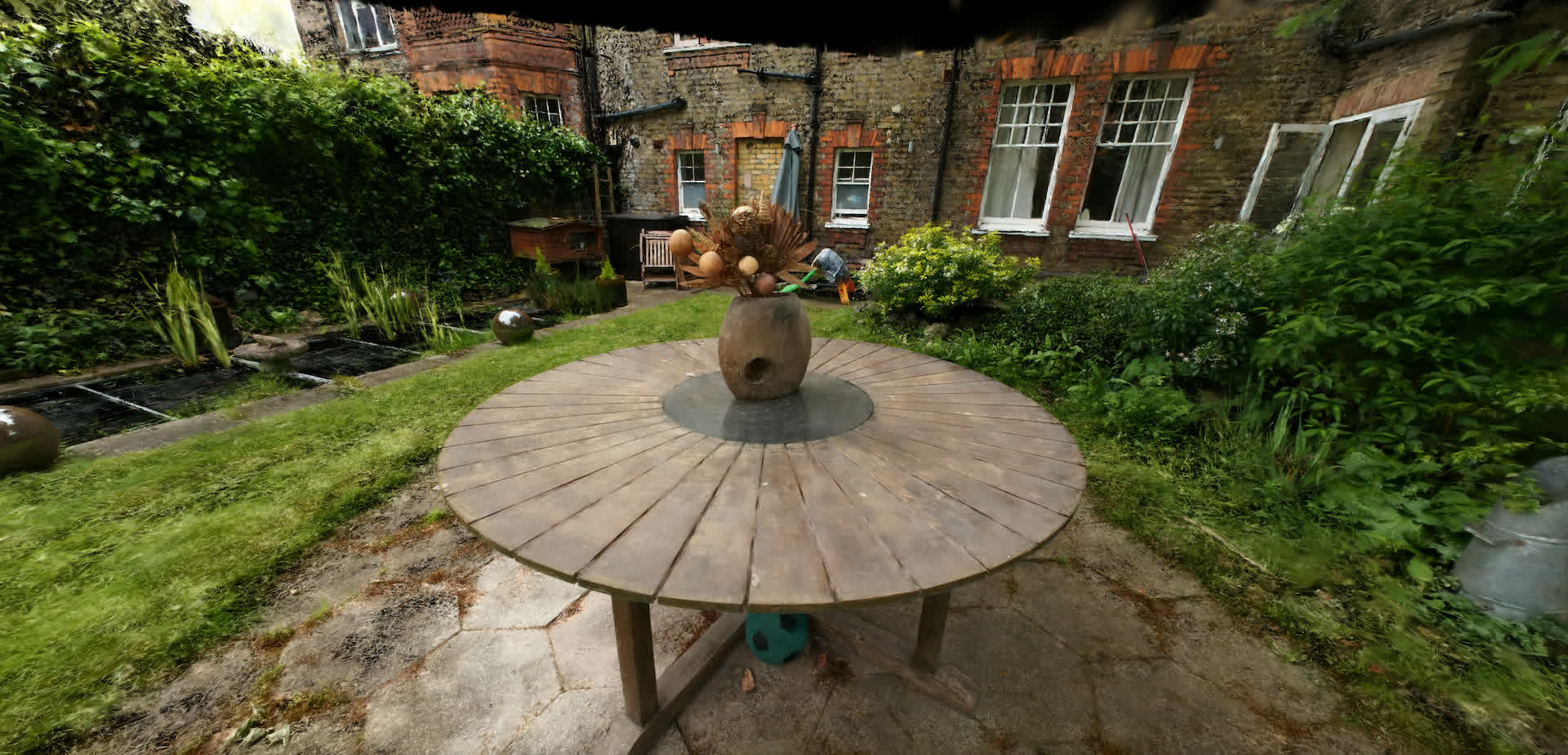
2025A differentiable CUDA renderer for training 4D Gaussian splats, and a WebGPU renderer for in-browser viewing.
Media